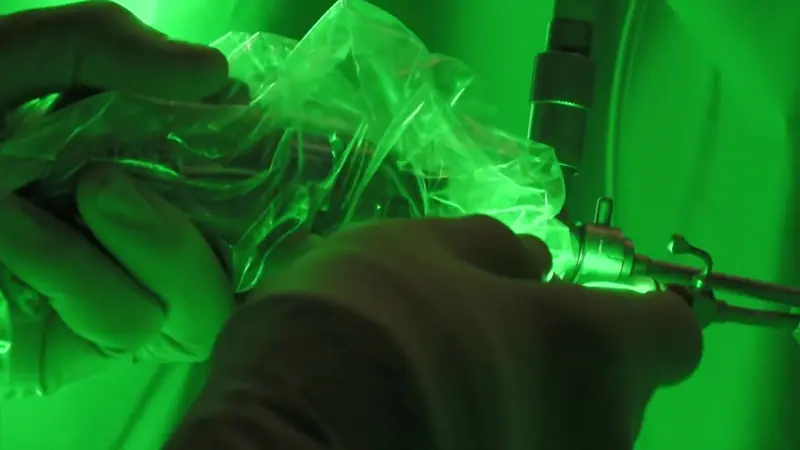
Green laser fibre held by the surgeon in the operating theatre

Treating prostate adenoma with lasers

We are all unique, and so are our prostates.

A personalised approach for every prostate

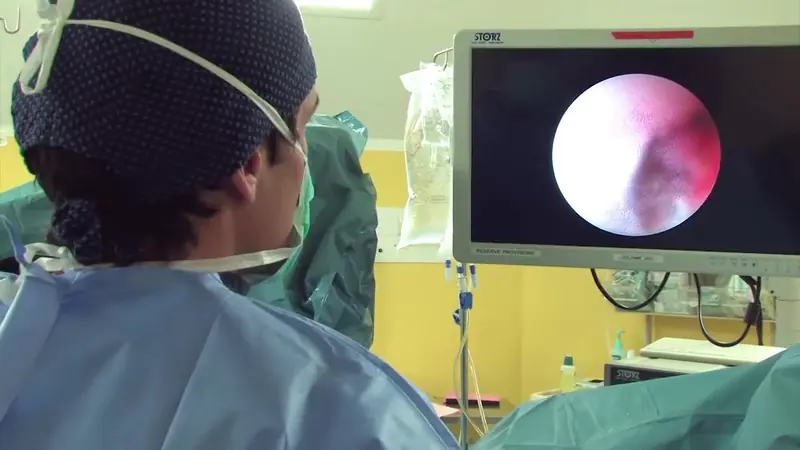
Surgeon following the operation on the endoscopy screen in the operating theatre

We have chosen to invest in multiple techniques for treating prostate enlargement so that we can offer men personalised treatment.

We can adapt the treatment to the anatomical features of each prostate and to each man’s expectations in terms of functional outcome.

Laser treatment of prostate adenoma has several advantages

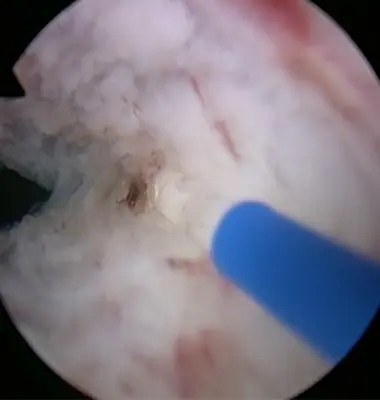
Endoscopic view of the prostate during a laser procedure
  • Precision: lasers allow a high degree of surgical precision, which reduces damage to surrounding tissue and minimises the risk of complications.
  • Symptom relief: laser treatments aim to reduce the excess prostate tissue obstructing the urethra, which can significantly improve urinary symptoms in patients with benign prostatic hyperplasia.
  • A range of options: there are several laser techniques, allowing doctors to choose the method best suited to each patient depending on factors such as prostate size and the patient’s preferences.
  • Faster recovery: because they are less invasive, laser treatments can lead to faster recovery and a quicker return to normal activities than more traditional surgical procedures.

There are two main types of laser treatment for adenoma

Vaporisation

Uses a specific laser (GreenLight) to vaporise the excess prostate tissue blocking the urethra. The laser energy is absorbed by the prostate tissue, causing it to vaporise

Length of procedure
between 30 min and 1 hour depending on prostate volume
Length of hospital stay
day surgery or one day
Post-operative catheter
from a few hours to 48 hours
Type of anaesthesia
General or spinal anaesthesia
Indication
prostate < 50 g
Advantage
short hospital stay, little bleeding (suitable for patients on anticoagulants), rapid recovery.

Enucleation

Uses a thulium or holmium laser to dissect and remove the excess prostate tissue obstructing the urethra. Unlike other methods that vaporise the tissue, thulium/holmium laser enucleation removes the prostate tissue in blocks. A technique particularly suited to prostate volumes > 60 g

Length of procedure
between 1 and 3 hours depending on prostate volume
Length of hospital stay
1 to 2 days on average
Post-operative catheter
1 à 2j
Type of anaesthesia
usually general, but spinal anaesthesia is possible
Indication
prostate > 50 g
Advantage
very effective, very low risk of recurrence over time, much less invasive than open techniques (open adenomectomy) for treating large adenomas.

Benign prostatic hyperplasia explained on video by Dr Nicolas Korahanis

Video hosted by YouTube: playing it may set cookies.

Read the transcript1 min read

Dr Nicolas Korahanis, urological surgeon

0:15 Benign prostatic hyperplasia is a very common condition in men. It affects about 100,000 men a year in France. It is the second most common operation in men after inguinal hernia repair. It has absolutely nothing to do with prostate cancer.

0:28 In the 21st century, surgery for prostate adenoma is done with lasers. Here at Clinique Saint-Jean, we have two lasers for the prostate: the GreenLight laser and the Holmium laser. The choice of laser depends on the size of your prostate and your other medical conditions: vaporisation or enucleation.

0:46 Enucleation consists of removing as much of the adenoma as possible: it is like hollowing out an orange without breaking the peel. We were the first team in Montpellier to offer this treatment, five years ago now. For very large prostates, we prefer to use a powerful laser to perform the enucleation in the best possible conditions.

1:02 Thanks to our experience of 150 patients a year, our patients stay one day in the clinic, compared with six on average in France, and some procedures can even be done as day surgery.

1:13 If you think these symptoms apply to you, you can fill in a self-assessment questionnaire on our website urosaintjean.com, or come and see us directly in consultation.
Laser vaporisation of the prostate

Video hosted by YouTube: playing it may set cookies.

Holmium laser enucleation

Read the transcript1 min read

Animation narrated in English — transcript

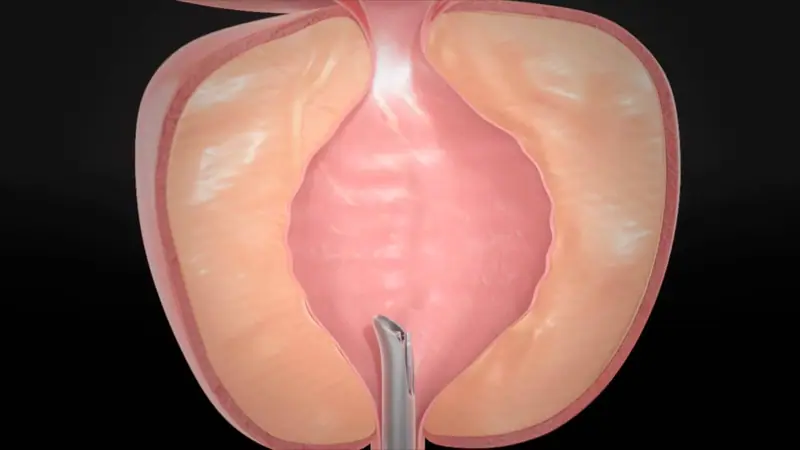
This technique is used for large prostates, over 60 grams. It involves removing the enlarged prostate tissue by cutting it out with a Holmium laser.

A cystoscope is inserted through the urethra with a laser fibre. The high energy of this laser coagulates the blood vessels, which prevents bleeding. The laser fibre separates the enlarged tissue from the prostate capsule, following a natural dissection plane. The prostate tissue is then pushed into the bladder. This technique allows very large prostates to be treated with minimal bleeding.

The prostate tissue placed in the bladder is broken up by a special instrument that sucks in and cuts small fragments. These are then removed, which allows them to be examined under the microscope. The procedure ends with the insertion of a urinary catheter.

TEST YOURSELF!

The IPSS questionnaire assesses in a few minutes how much your urinary symptoms bother you.

TEST YOURSELF

Conditions concerned and surgeons

Page reviewed and approved by Dr Nicolas Korahanis, urological surgeon. Updated on . The medical pages of this website are reviewed every year.

Sources

This information does not replace a medical consultation.