Prolapse

A feeling of a “lump” in the vagina, heaviness, difficulty passing urine: organ prolapse is common after pregnancy and at menopause. It can be treated at the clinic by laparoscopy, with 2 nights in hospital.

Book appointment

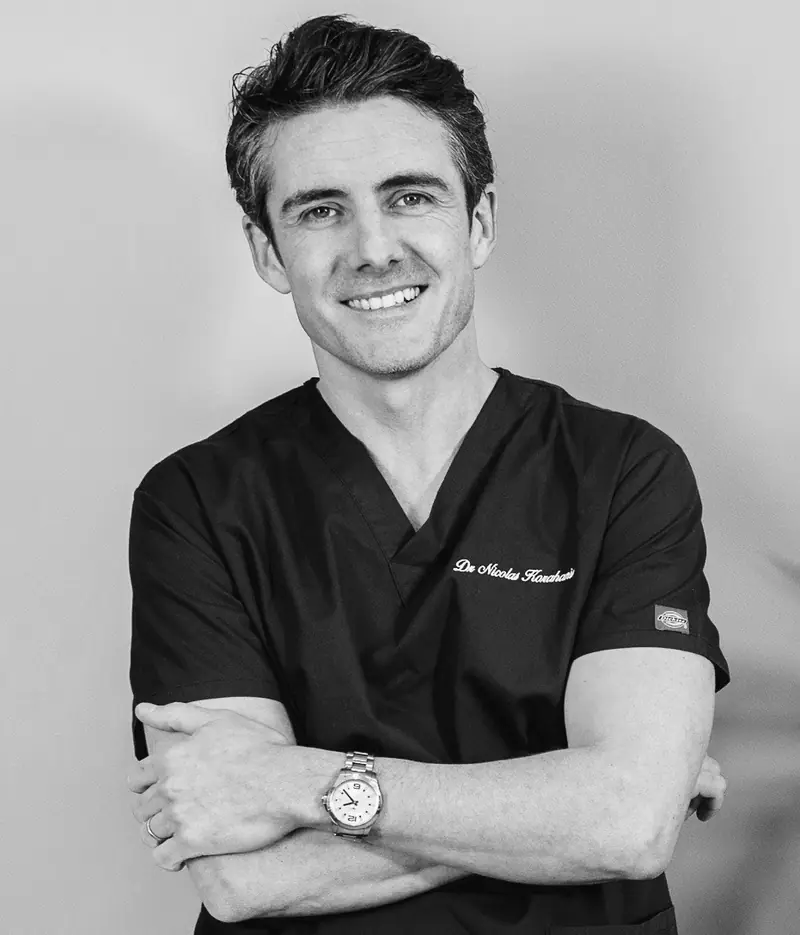
Reviewed by Dr Nicolas Korahanis, urological surgeon · updated on

In brief

Prolapse, or “pelvic organ prolapse”, is the bulging of the bladder, uterus or rectum into the vagina when the pelvic floor (muscles and ligaments) no longer supports them. If the discomfort is moderate, monitoring, pelvic floor rehabilitation or a pessary may be offered; when it is significant, surgery is offered: laparoscopic sacrocolpopexy aims to reposition the organs and suspend them using a reinforcing mesh.

Key points

  • Common

    Especially after childbirth and at menopause.

  • A “lump” in the vagina

    Heaviness, difficulty passing urine or opening the bowels, pain during intercourse.

  • Laparoscopy

    Sacrocolpopexy takes about 1 hour, through small incisions.

  • 2 nights at the clinic

    Then about 1 month without strain or lifting.

Understanding the condition

Prolapse feels like having a “lump” in the vagina. This lump can make it difficult to pass urine or cause pain, particularly during sexual intercourse.

Anatomy

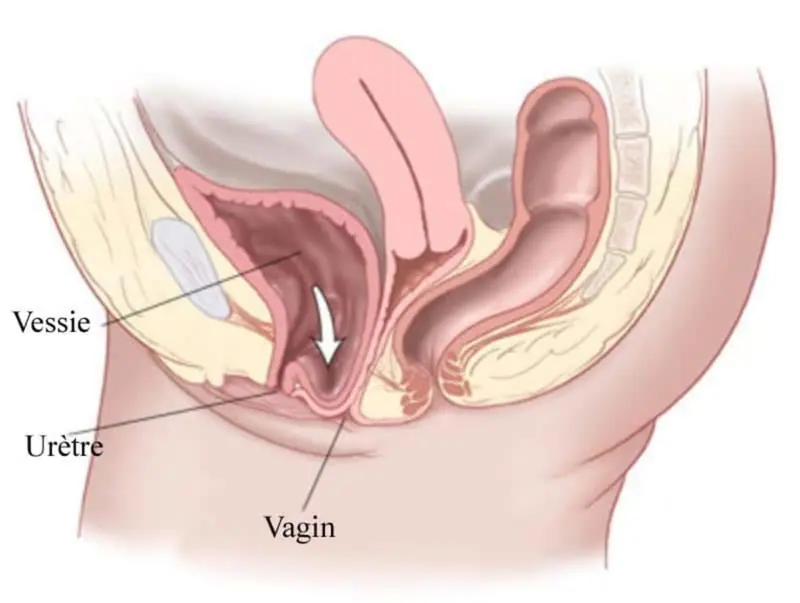
The organs in the female pelvis are held in place by a set of muscles and ligaments that form the pelvic floor. It acts like a hammock supporting the bladder, uterus and rectum.

Prolapse, commonly called “organ descent”, occurs when these organs are no longer supported and bulge to varying degrees into the vagina, or even beyond the vulva if the prolapse protrudes. It may involve the bladder (cystocele), uterus (hysterocele) and rectum (rectocele), alone or in combination.

Pregnancies and childbirth, menopause, excess weight, chronic constipation, coughing or carrying heavy loads weaken this support.

Diagnosis

Prolapse causes a variety of symptoms: perineal heaviness, a “lump” protruding from the vulva, urinary, sexual or digestive symptoms. The operation offered by your urologist aims to reposition the bladder, vagina, uterus and rectum correctly in the pelvis.

An examination in consultation is usually enough to make the diagnosis; urodynamic tests or imaging may complete it. If the discomfort is moderate, monitoring, pelvic floor rehabilitation or a pessary (a device placed in the vagina) may be offered before surgery is considered.

Surgical technique

This repositioning is combined with reinforcement of the organs’ supports using a synthetic reinforcing mesh (prosthetic implant) compatible with the human body.

Finally, it may be combined with an operation to treat stress urinary incontinence.

Depending on your medical file, it may be necessary to remove part or all of the uterus, or the ovaries. This is then discussed with your surgeon.

Laparoscopic sacrocolpopexy: the operation is performed under general anaesthesia. At our clinic, it is carried out laparoscopically. It takes about 1 hour. A synthetic mesh is fixed between the bladder and the front wall of the vagina. A second mesh may be fixed between the rectum and the back wall of the vagina. The mesh (or meshes) is then attached to a very strong ligament located in front of the spine, in front of the sacrum.

In simple terms: through a few small incisions in the abdomen, the surgeon puts the organs back in place and suspends them, using a reinforcing tape, from a strong ligament in the lower back. Only small scars remain.

Usual course after surgery

  1. 1

    At the clinic

    The hospital stay lasts 2 nights.

    A urinary catheter is kept in for 24 hours. Bowel function (passing wind) usually returns within the first 24 hours. However, constipation may bother you for a few days and last longer if you are prone to it. A laxative may then be prescribed.

  2. 2

    The first month

    A period of convalescence is needed. Its length depends on your job.

    You must avoid strain, sport, carrying heavy loads, baths and penetrative sexual intercourse for about 1 month.

    You may be prescribed stool softeners so that you do not have to strain to open your bowels.

  3. 3

    The follow-up consultation

    A follow-up consultation with your urologist is scheduled a few weeks after the operation. Your urologist will decide when you can resume all your activities, especially sport.

    You should avoid strenuous exertion for 3 months after the operation.

Risks and complications

During and after the operation

In most cases, the operation proposed to you goes smoothly. However, every surgical procedure carries a number of risks and complications, described below.

Complications directly related to the operation are rare (less than 5%), but possible:

During the operation: injury to the bladder, vagina or ureter

After the operation: bleeding – haematoma, pain, digestive problems and difficulty opening the bowels, urinary problems.

Urinary problems

In some cases, stress urinary incontinence may appear after the operation and may later require an additional operation. Frequent or urgent needs to urinate after the operation are not uncommon. If they existed before the operation, they may persist afterwards, even once your bladder has been put back in place. Significant difficulty passing urine may also occur, requiring a catheter to be put back into the bladder.

Sexuality

Effect on sexual intercourse: by putting the prolapsed organs back in the right position, the operation usually improves your sex life. However, intercourse may rarely be affected by pain or problems with vaginal lubrication. Treatment may be prescribed to improve these local symptoms.

Good to know

Please remember that any surgical operation carries a number of risks, including life-threatening ones, due to individual variations that are not always predictable. Some of these complications are exceptional (injury to blood vessels, nerves or the digestive tract) and may sometimes not be curable.

During this operation, the surgeon may come across an unexpected finding or event requiring procedures in addition to or different from those initially planned, or even the interruption of the planned procedure.

After the operation

Results

The anatomical and functional result is usually good in the long term. It cannot, however, be guaranteed.

Recurrence of the prolapse is always possible, linked to many factors (excess weight, chronic cough, changes in the vaginal lining at menopause, constipation…), but the risk varies from one patient to another. Recurrence of the prolapse is not always accompanied by the return of urinary, sexual or digestive symptoms.

Preserving the result

Keeping a stable weight, treating constipation, avoiding heavy lifting and continuing pelvic floor exercises help limit the risk of recurrence.

Documentation

AFU information sheet (in French)

AFU information sheet (in French)

Genital prolapse: repair by laparoscopic sacrocolpopexy, robot-assisted or not (2025)

View the AFU sheet (in French)

Your care at the practice

At the practice, this care is provided by Dr Nicolas Korahanis and Dr Samer Abdel-Hamid.

Consultations take place at the Consultation Centre, in Saint-Jean-de-Védas, and at Polyclinique Saint-Louis, in Ganges. Depending on the operation, it is performed at Clinique Saint-Jean Sud de France or at Polyclinique Saint-Louis.

Why choose URO Saint-Jean?

  • Laparoscopic surgery

    An operation through small incisions, for a faster recovery.

  • Prolapse and incontinence

    Both can be treated as part of the same care.

  • Careful follow-up

    A follow-up consultation a few weeks after the operation.

Your questions

Is surgery always necessary?

No. If the prolapse causes little discomfort, monitoring, pelvic floor rehabilitation or a pessary may be enough. Surgery is offered when the discomfort is significant.

Does the uterus have to be removed?

Not always: it depends on your medical file and is discussed with your surgeon before the operation.

When can I start sport again?

Sport, strain and lifting should be avoided for about 1 month, and strenuous exertion for 3 months. Your urologist will confirm when you can resume at the follow-up consultation.

Page reviewed and approved by Dr Nicolas Korahanis, urological surgeon. Updated on . The medical pages of this website are reviewed every year.

Sources

This information does not replace a medical consultation.