Planning Focal One treatment on the console screen

Focal treatment of prostate cancer with focused ultrasound (Focal One)

What if prostate cancer could be treated without removing the prostate? With Focal One®, focused ultrasound destroys only the diseased area, located to the millimetre by MRI. The rest of the gland is preserved — and with it, your quality of life.

Reviewed by Dr Nicolas Korahanis, urological surgeon · updated on

Key points

  • Only the tumour is treated

    The diseased area is located by MRI and 3D ultrasound, then destroyed by ultrasound. Healthy tissue is spared.

  • No incision, no radiation

    The ultrasound reaches the prostate through the wall of the rectum: no scar, no radiotherapy.

  • Continence and erection better preserved

    By sparing the nerves and the sphincter, focal treatment limits the risk of urinary and sexual after-effects.

  • Short hospital stay

    Home the same day or the next day, and a quick return to your activities.

Who is it for?

Focal One is for men whose prostate cancer is localised — it has not spread outside the prostate — and limited to one area clearly visible on MRI.

  • Low- or intermediate-risk localised cancer, confirmed by targeted biopsies
  • A lesion clearly visible on prostate MRI
  • Local recurrence after radiotherapy (so-called “salvage” treatment)

Every case is discussed at a multidisciplinary team meeting (MDT) with oncologists and radiotherapists. Focal One is not suitable for every cancer: at your consultation, based on your MRI and biopsies, your surgeon will tell you whether it is right for you — or whether surveillance, robotic surgery or radiotherapy would be better.

What does the treatment involve?

  1. A surgeon outlines the prostate on the MRI images
    1

    The assessment

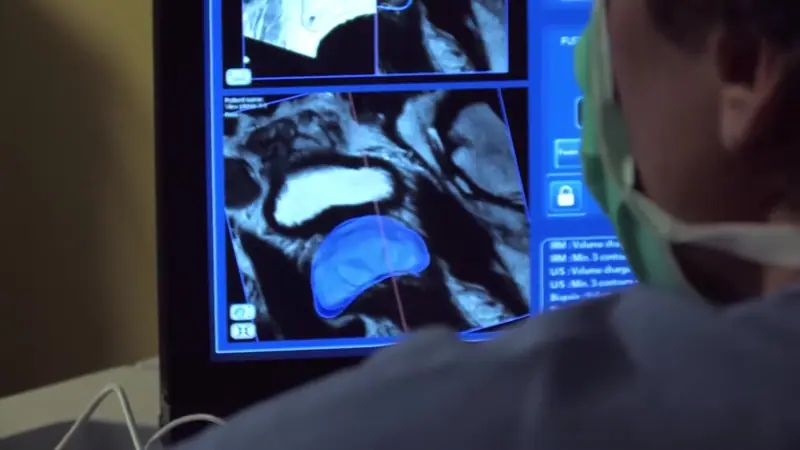
    A prostate MRI and targeted transperineal biopsies with image fusion precisely locate the tumour.

  2. Area to be treated outlined on the prostate ultrasound
    2

    Planning

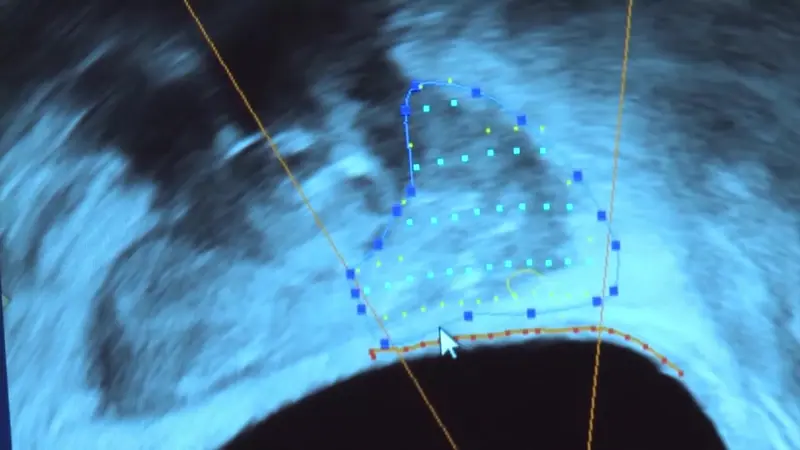
    On the day of treatment, the robot fuses your MRI images with a real-time 3D ultrasound. The surgeon outlines the area to be treated, with a safety margin.

  3. Positioning the Focal One probe
    3

    The treatment

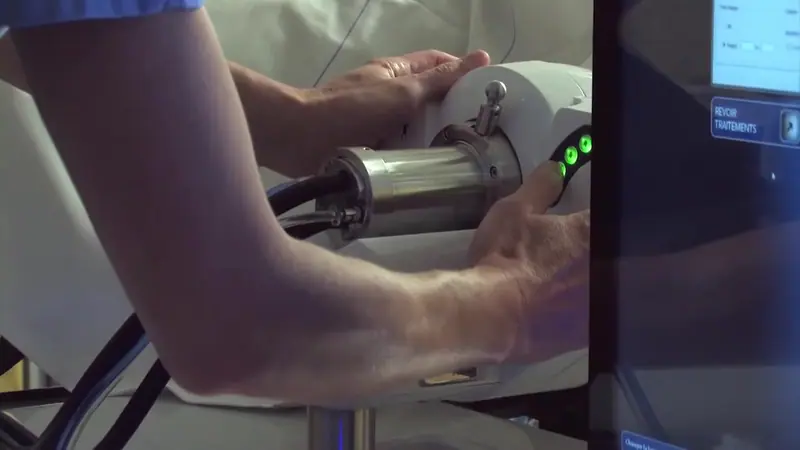
    Under anaesthesia, a probe is placed in the rectum. The ultrasound heats the targeted area point by point, under the surgeon’s constant control. It takes about 1 to 2 hours depending on the volume to be treated.

  4. 4

    Going home

    The same day or the next day. A urinary catheter is often left in for a few days while the swelling of the prostate goes down.

Focal One in pictures

Video without narration

After treatment: close follow-up

Follow-up is the key to focal treatment. It is based on:

  • regular PSA tests;
  • a follow-up MRI — and, if needed, biopsies — within the following year;
  • a consultation with your surgeon at each stage.

If an area remains active or a new lesion appears, all options remain open: a new ultrasound treatment, surgery or radiotherapy.

Possible effects

  • Burning when passing urine and frequent urges, for a few days to a few weeks.
  • A little blood in the urine or semen in the first weeks.
  • A reduced volume of ejaculate.
  • More rarely: a urinary tract infection, or difficulty passing urine requiring the catheter to be kept in longer.
  • Erection problems or urinary leakage: less common than after treatment of the whole prostate, but possible.

At your consultation, your surgeon will explain the risks specific to your situation.

Why choose URO Saint-Jean?

  • 20 years of experience

    Dr Bruno Segui performed the first treatments of prostate cancer with high-intensity focused ultrasound in 2004, and takes part in research on the follow-up of treated patients.

  • A Focal One lead surgeon

    Dr Nicolas Korahanis is the lead surgeon for prostate cancer treatment with Focal One and 3D image fusion.

  • All the options in one place

    Targeted transperineal biopsies, Da Vinci robotic surgery, focused ultrasound: the choice is made with you, according to your cancer and your expectations.

Your questions

Is the treatment painful?

It is performed under anaesthesia. Afterwards, the discomfort is moderate and relieved by simple painkillers. There is no scar and no radiation.

How long will I stay in hospital?

Usually, you go home the same day or the next day.

Will I keep my erections and continence?

That is the whole point of focal treatment: by sparing most of the prostate, the erectile nerves and the sphincter, the risk of urinary leakage and erection problems is lower than after treatment of the whole prostate. It is not zero, however: your surgeon will discuss it with you at your consultation.

What if the cancer comes back?

Follow-up (PSA, MRI, biopsies) allows it to be detected early. Focal One can then be repeated, or followed by surgery or radiotherapy: focal treatment closes no doors.

Does Focal One replace surgery or radiotherapy?

No, it adds to them. For very small, slow-growing cancers, simple surveillance is enough; for others, removal of the prostate or radiotherapy remain the best choice. Focal One fits in between.

Conditions concerned and surgeons

Page reviewed and approved by Dr Nicolas Korahanis, urological surgeon. Updated on . The medical pages of this website are reviewed every year.

Sources

This information does not replace a medical consultation.