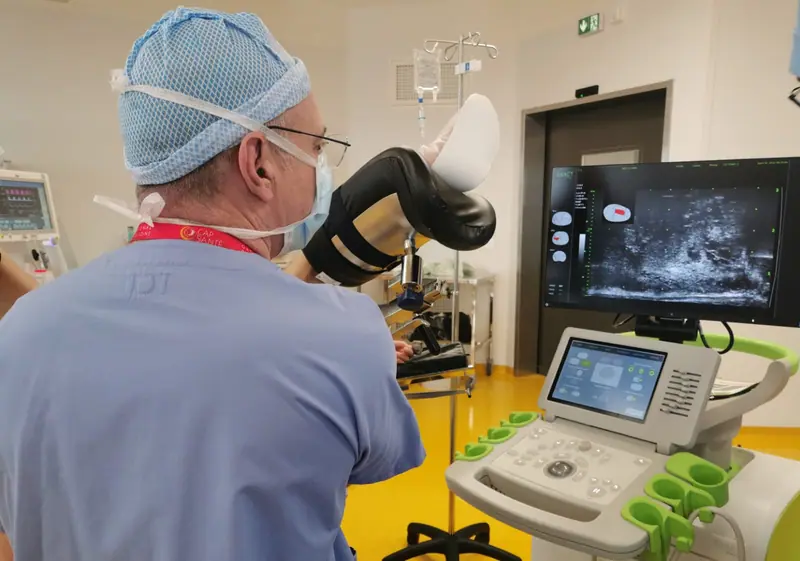
Ultrasound-guided prostate biopsy in the operating theatre

an innovative technique

Transperineal prostate biopsy with image fusion

An innovative, painless technique: samples are taken through the skin rather than through the rectum.

Prostate biopsy

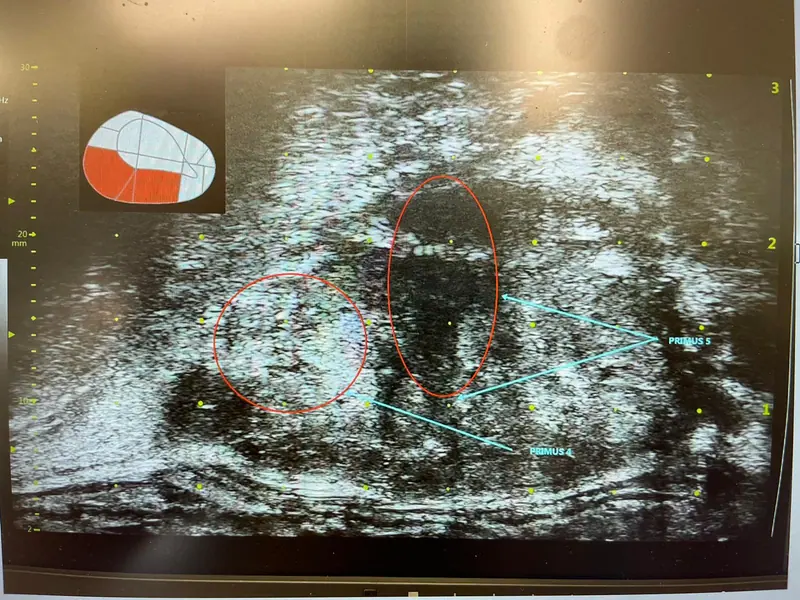
Ultrasound of the prostate during the biopsy, showing the targeted areas

What is a prostate biopsy?

Ultrasound-guided prostate biopsy is the only test that can diagnose prostate cancer.

If this diagnosis is suspected (raised total PSA level; abnormal digital rectal examination), your urologist will suggest a series of ultrasound-guided prostate biopsies, which may be preceded by a pelvic and prostate MRI to look for targets within the prostate.

Approach

2%infections requiring hospital admission after transrectal biopsy, compared with less than 1% via the transperineal route (TRANSLATE trial, 2025)

Diagram of a transperineal prostate biopsy

Although prostate biopsies can be performed via the transrectal or the transperineal route, the transrectal route has been called into question because of a higher risk of infection than with the transperineal route (Pradere et al., 2021).

The URO Saint-Jean team now offers patients the transperineal route under anaesthesia. This innovative, painless technique involves taking samples of prostate tissue through the skin instead of through the rectum. The 2024–2026 guidelines of the cancer committee of the French Association of Urology (AFU) state that performing biopsies via the transperineal route reduces the risk of infection (Ploussard et al., 2024). In a British randomised trial of 1,126 patients, an infection requiring hospital admission within 35 days occurred in 2% of patients after transrectal biopsy, compared with less than 1% after transperineal biopsy (TRANSLATE trial, Bryant et al., 2025). This risk is low in both cases and is not zero with the transperineal route. The other complications are no less frequent than with the transrectal route: in the same trial, urinary retention requiring a catheter occurred in 6% of patients with the transperineal route and 5% with the transrectal route.

Image fusion

12biopsies taken “somewhat at random” until now; image fusion targets the at-risk area

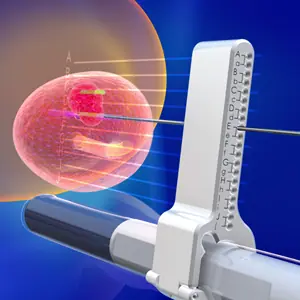
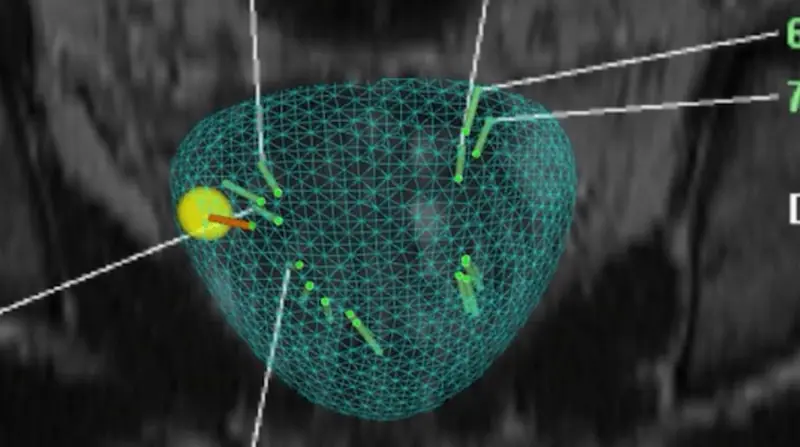
3D model of the prostate from MRI–ultrasound fusion, showing the biopsy paths

The transperineal biopsy technique can use image fusion and be performed with targeting

What does this targeting involve?

Until now, biopsies were taken somewhat at random, with 2 biopsies per sextant of the prostate, 12 biopsies in total.

The targeted biopsy technique uses MRI–ultrasound image fusion technology.

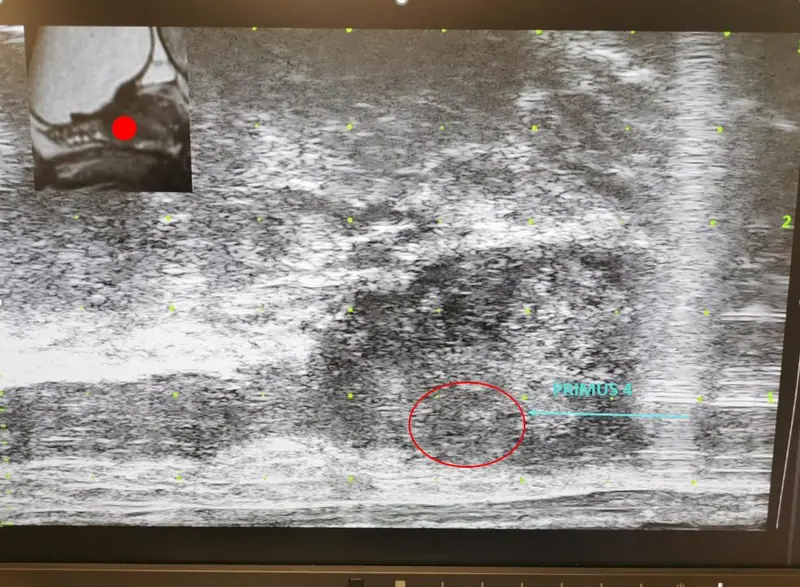
During the biopsy, your urologist will see exactly where the area at highest risk of cancer is, as detected on the MRI, which should be sampled first.

Biopsies can be directed at this area only, reducing the number of biopsies, the pain and the risks associated with the procedure.

Preparing the patient

Ultrasound of the prostate with the target identified on MRI

Antibiotic prophylaxis

Not routine with the transperineal route (unlike the transrectal route)

May be considered depending on individual risk factors

Rectal preparation

No routine rectal enema

Unlike the transrectal route,

After the biopsy

within10daysfor the final diagnosis

Common side effects of prostate biopsy

You have had a series of prostate biopsies. After this test, you may have the following symptoms:

  • Haematuria: blood in the urine
  • Haematospermia: blood in the semen (red to brown discharge on ejaculation in the days following the test)
  • Fever and burning when passing urine, sometimes as high as 39–40 °C, with or without shivering: this is a urological emergency and you must contact your urologist so that your antibiotic treatment can be adjusted (a new antibiotic is often prescribed, sometimes during a short hospital stay).

Prostate biopsy results

Once the biopsy samples have been taken, they are examined under the microscope by a pathologist. As the final diagnosis is available within 10 days of the biopsies, your urologist will give you the results at a follow-up consultation.

Performing biopsies via the transperineal route reduces the risk of infection.

According to the 2024–2026 guidelines of the cancer committee of the French Association of Urology

The biopsy in pictures

Conditions concerned and surgeons

Page reviewed and approved by Dr Bruno Segui, urological surgeon. Updated on . The medical pages of this website are reviewed every year.

Sources

Scientific references

  1. Pradere B, et al. Nonantibiotic Strategies for the Prevention of Infectious Complications following Prostate Biopsy: A Systematic Review and Meta-Analysis. The Journal of Urology. 2021. doi:10.1097/JU.0000000000001399
  2. Ploussard G, et al. French AFU Cancer Committee Guidelines – Update 2024-2026: Prostate cancer – Diagnosis and management of localised disease. The French Journal of Urology. 2024. doi:10.1016/j.fjurol.2024.102717
  3. Bryant RJ, et al. Local anaesthetic transperineal biopsy versus transrectal prostate biopsy in prostate cancer detection (TRANSLATE): a multicentre, randomised, controlled trial. The Lancet Oncology. 2025. doi:10.1016/S1470-2045(25)00100-7

This information does not replace a medical consultation.